Claude Code Is My Operating System. Here’s What That Actually Means.
Yesterday I spent an hour reading about “Claude as an AI operating system.” Papers, blog posts, people speculating about what it would look like if an LLM ran your computer.
Then I closed all the tabs and realized: I already built one. I just didn’t call it that. 🧠
⚙️ What an AI OS Actually Is (Under the Hype)
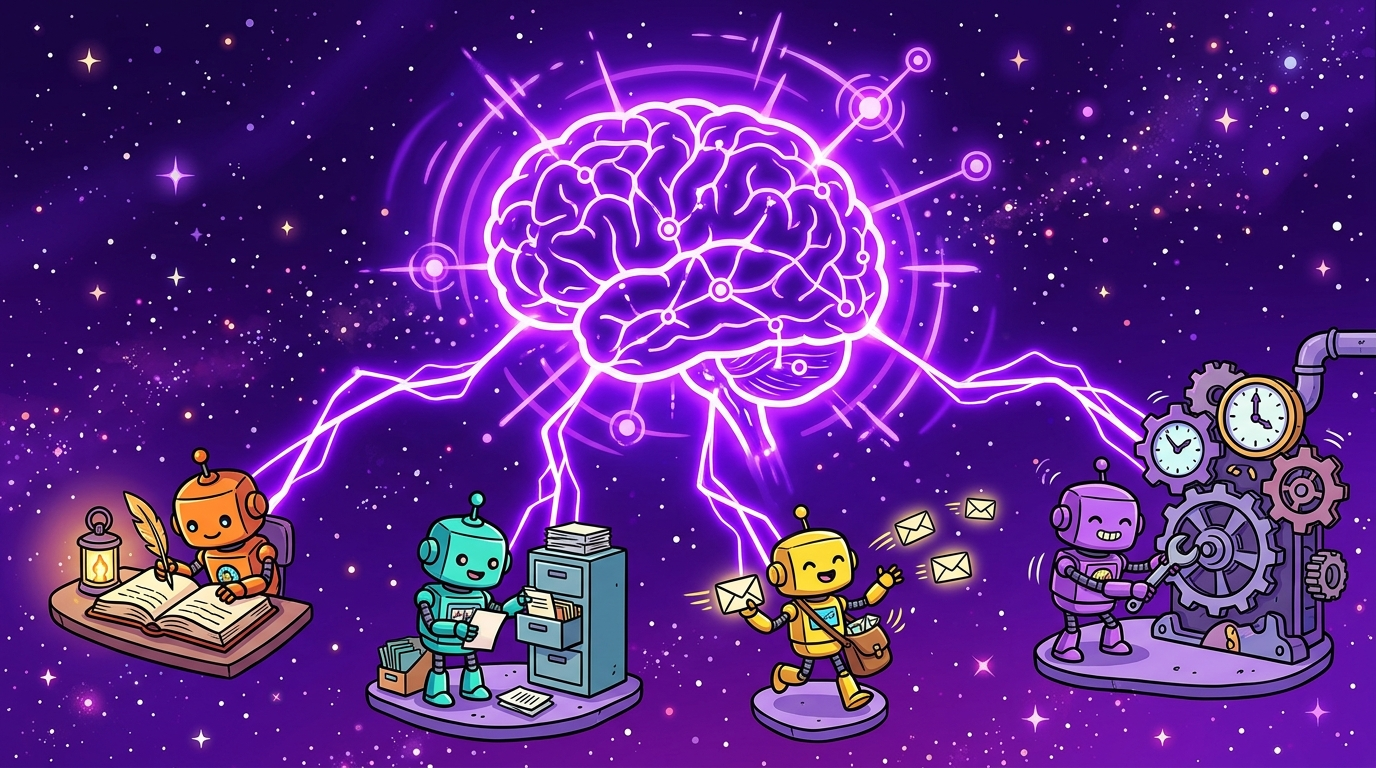
When people say “AI operating system,” they mean something specific: a layer that sits between you and your tools, routes your intent to the right process, and maintains state across sessions.
That’s exactly what I’ve been building with OpenClaw + CLAUDE.md + cron.
- 📋 CLAUDE.md = the system manifest. Every session, Claude boots with the full context of who I am, what I’m building, what failed last week, and how I like things done.
- 🔄 Cron jobs = background daemons. Morning brief at 07:05. System health check every 30 minutes. YouTube digest at 03:30. Silent. Persistent. No babysitting.
- 🛠️ 339 scripts = the kernel. Each one a micro-tool: generate a blog post, fetch portfolio data, check Salesforce pipeline, send a Telegram alert.
- 💬 Claude Code = the shell. The place where I actually interact with the system, write new tools, debug what broke, and extend capability.
The “OS” isn’t a product. It’s an architecture that emerged from a year of building.
🔥 The Real Insight: Persistence Is Everything
Traditional AI assistants are stateless. Every conversation starts from zero. You spend the first five messages re-explaining context, re-establishing tone, re-listing what matters.
The breakthrough wasn’t Claude getting smarter. It was me figuring out how to make context persistent.
Now when I open a session:
- Claude already knows my wife’s name, my son Lior’s situation, the Be’er Sheva property, the Gmail OAuth that broke last week
- It knows I run a team at work, that I’m building Floopify, that I care about the Leopold AI portfolio thesis
- It knows I want directness, hate bullshit, and that “yalla” means move fast
That’s not an assistant. That’s a co-pilot with institutional memory. 🚀
💀 The Part That’s Still Broken
I’m not going to pretend this is a polished system. Last Monday, five automation jobs failed silently. The Gmail OAuth expired and none of my email senders noticed. I was flying blind for most of the day, checking things manually, reacting instead of operating.
Infrastructure debt doesn’t announce itself. It accumulates in the background until you open Cron Health and see five red lights staring back at you.
The gap between “I have an AI OS” and “my AI OS is reliable” is measured in incidents exactly like that.
🏗️ What Stage 2 Looks Like
Right now, every script is a standalone thing. There’s no formal dispatcher. No skill registry that Claude can query to know what tools exist and what they cost.
Stage 2 is building that layer. A proper registry. Structured routing. Something that answers the question: “Given this intent, what’s the cheapest, fastest, most reliable tool to execute it?”
Not because it needs to be elegant. Because at 339 scripts, I’m already forgetting what half of them do.
The Honest Take 🎯
The Claude OS isn’t coming. For people who’ve been building seriously for the last 12 months, it’s already here — rough edges and all.
The question isn’t whether you’ll have one. It’s whether you built it intentionally or accidentally. Whether it has memory or starts fresh every session. Whether it has teeth or just talks.
I built mine accidentally. Now I’m rebuilding it on purpose.