3.2 and Idle: The Day Systems Broke and I Didn’t Notice
What the Numbers Actually Said

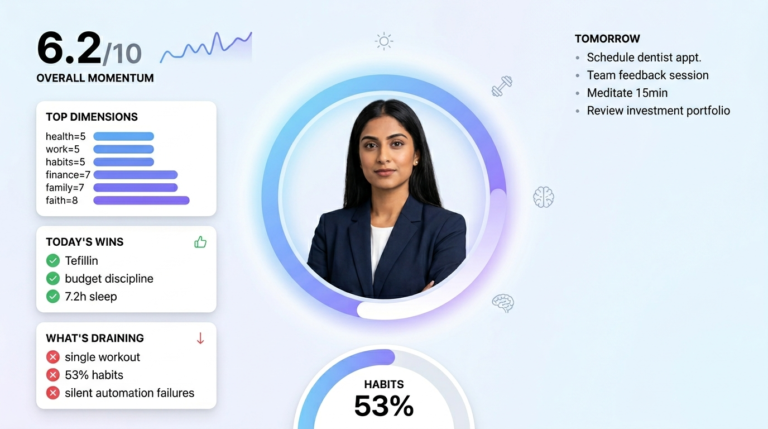
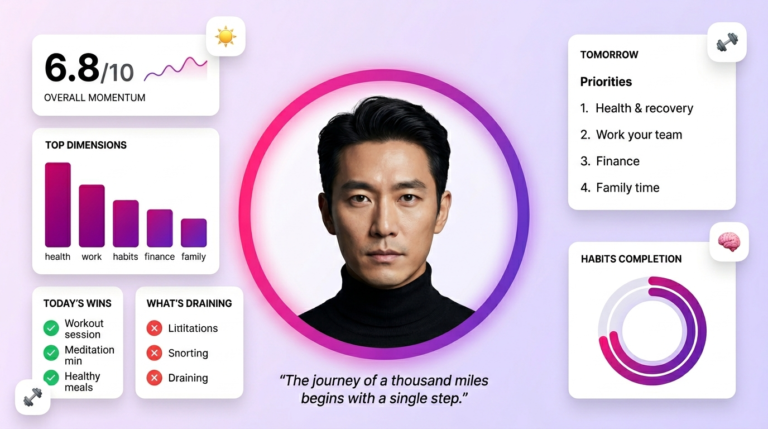
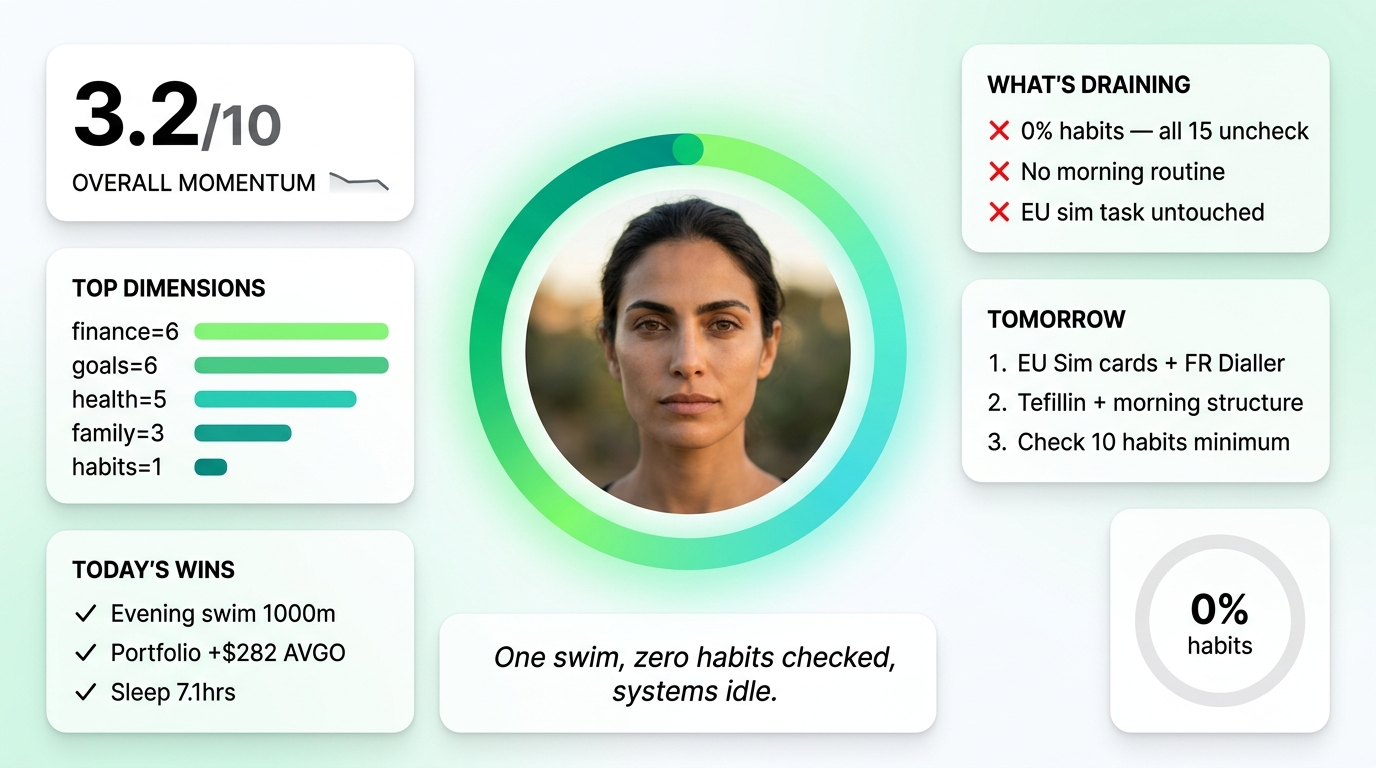
I looked at my Life OS dashboard at 11 PM and the score was 3.2 out of 10. Mood: idle.
That number should have alarmed me. Instead, I sat with it for a minute and thought: Yeah, that tracks.
Here’s what the dimensions revealed—and this is where the real story lives. Finance was at 6 (portfolio up on AVGO, systems worked). Goals at 6 (still marked In Progress, but no fresh movement). Health at 5 (one swim, 1000m, HR controlled, 7.1 hours sleep the night before). Everything else flatlined: family 3, work 3, faith 3, learning 3, system 3. Habits hit 1. One out of ten.
This wasn’t a crisis day. It was worse—it was a nothing day. A Tuesday where I moved money, swam, slept well, but didn’t show up for anything else on record. The data doesn’t lie when you build your own data. And today, my data said: I was present in exactly two buckets and absent everywhere it matters.

Why the Automation Mattered More Than the Task
The morning brief worked flawlessly. IBKR synced, ElevenLabs captured a clean voice note, the HTML portfolio card formatted perfectly. I got the analysis. But then the upload hosts failed—litterbox returned a 412, 0x0.st threw a 503. The voice note couldn’t persist. I had the output but lost the artifact.
That’s metaphor wrapped in a real technical failure.
Looking at Asana, I have 11 incomplete Skilled Hunters tasks and 4 overdue. Marketing has 1,884 total tasks, 211 incomplete. Weekly Priorities sits at 98 incomplete. But here’s the confession: I didn’t touch these today meaningfully. I know they exist. I’m not acting on them with intention. I’m just letting them accumulate.
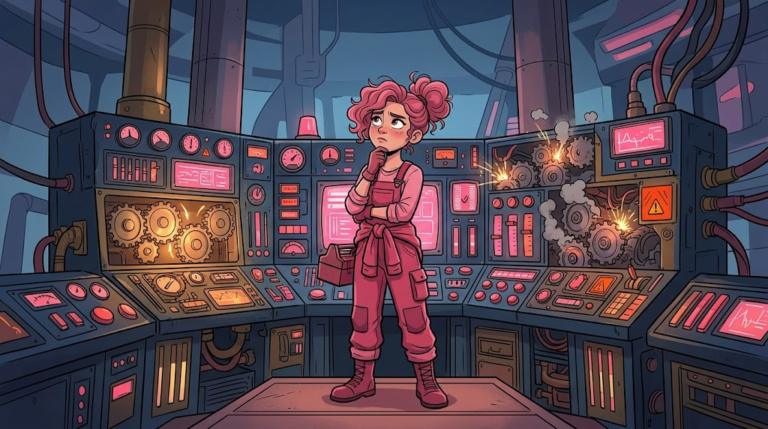
The cron automation log told the honest story. Morning Brief ran. Everything else went dark: Morning Email, Evening Brief, ScreenPipe Brief, Proactive AM, Blog Generator, Budget Updater. All failed. This is the infrastructure debt showing. I built these systems but they’re fragile—one misconfiguration, one API change, and the whole chain breaks. Today, the chain broke. I wanted the evening brief to compile, wanted the budget updater to run, wanted ScreenPipe to capture where my attention actually went. None of it happened.
And when the systems fail, I don’t rebuild them. I revert to manual work. And when manual work is the default, I don’t prioritize. I don’t execute. I just manage what’s in front of me.
The irony is brutal: I’m an IC SDR managing sales flow for a SaaS company by day, then going home to build automation systems that don’t automate. I’m optimizing other people’s pipelines while my own infrastructure is held together with hope and cron jobs.
The Honest Takeaway
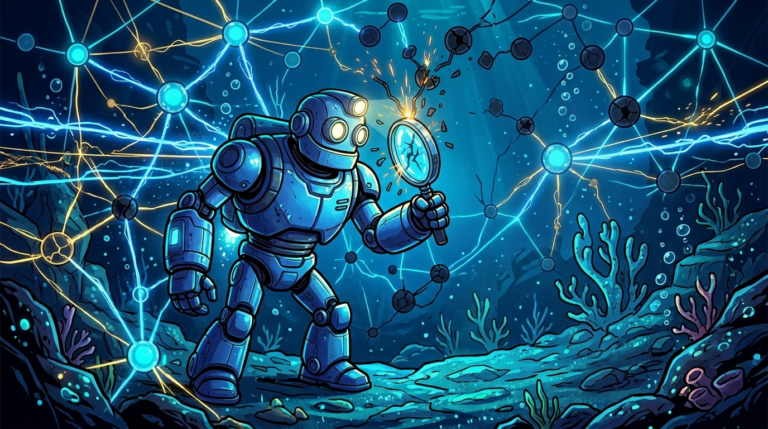
A 3.2 day isn’t failure. It’s a signal. And the signal here isn’t “you didn’t work hard enough.” It’s “your systems are lying to you.”
I built the right architecture. But I didn’t make it reliable. And unreliable systems become invisible systems. You stop trusting them. You stop using them. You go back to the paper list, the Slack thread, the thing in your head.
The question isn’t whether I can build systems. I can. The question is whether I can build systems I actually use. Systems robust enough to fail gracefully. Systems that don’t require a systems engineer to fix every time they break.
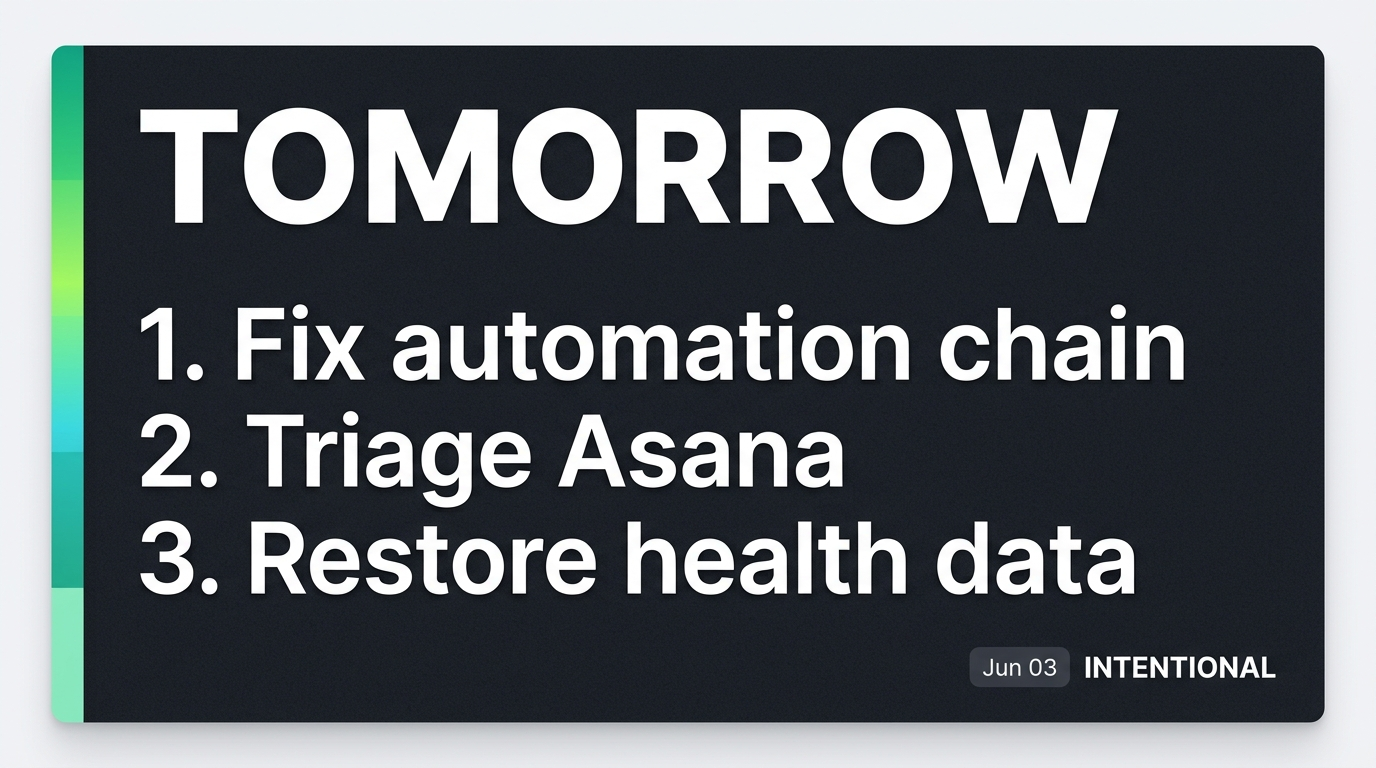
Tomorrow has to be different. Not revolutionary—just intentional. Fix the chain. Triage the noise. Restore visibility. Then measure again.
Because a 3.2 that teaches you something is better than a 7.0 that teaches you nothing.