4.4 and Fog: When the Morning Systems Fail, Everything Else Collapses
The Numbers Don’t Lie (Even When You Wish They Would)
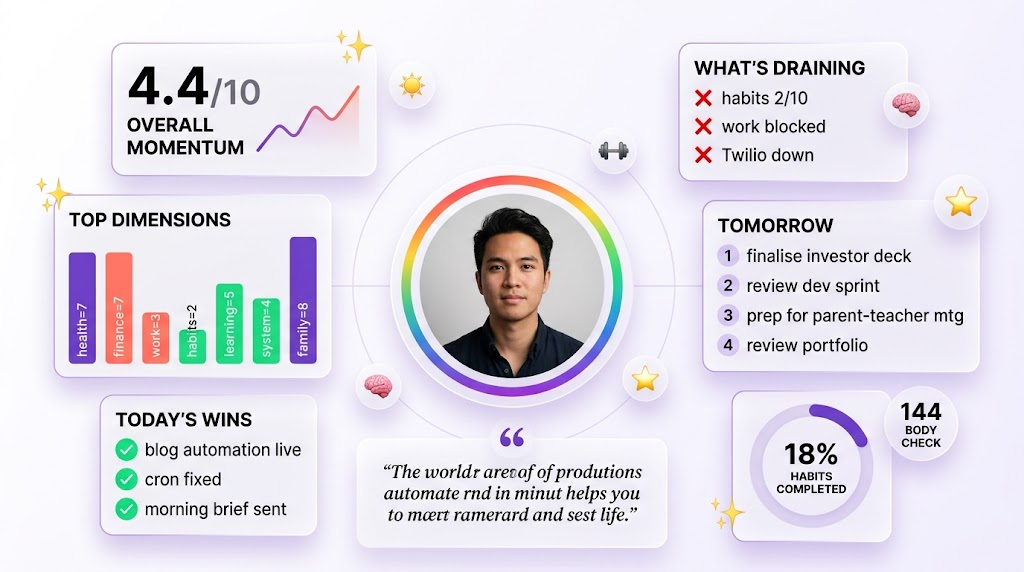
4.4 out of 10.
That’s not a day that’s bad enough to be a disaster story, and not good enough to feel like I made progress. It’s the score of a day that felt like operating underwater—everything took twice as long, decisions felt heavier, and I spent more time confused about what the real state of things was than I spent actually moving things forward.
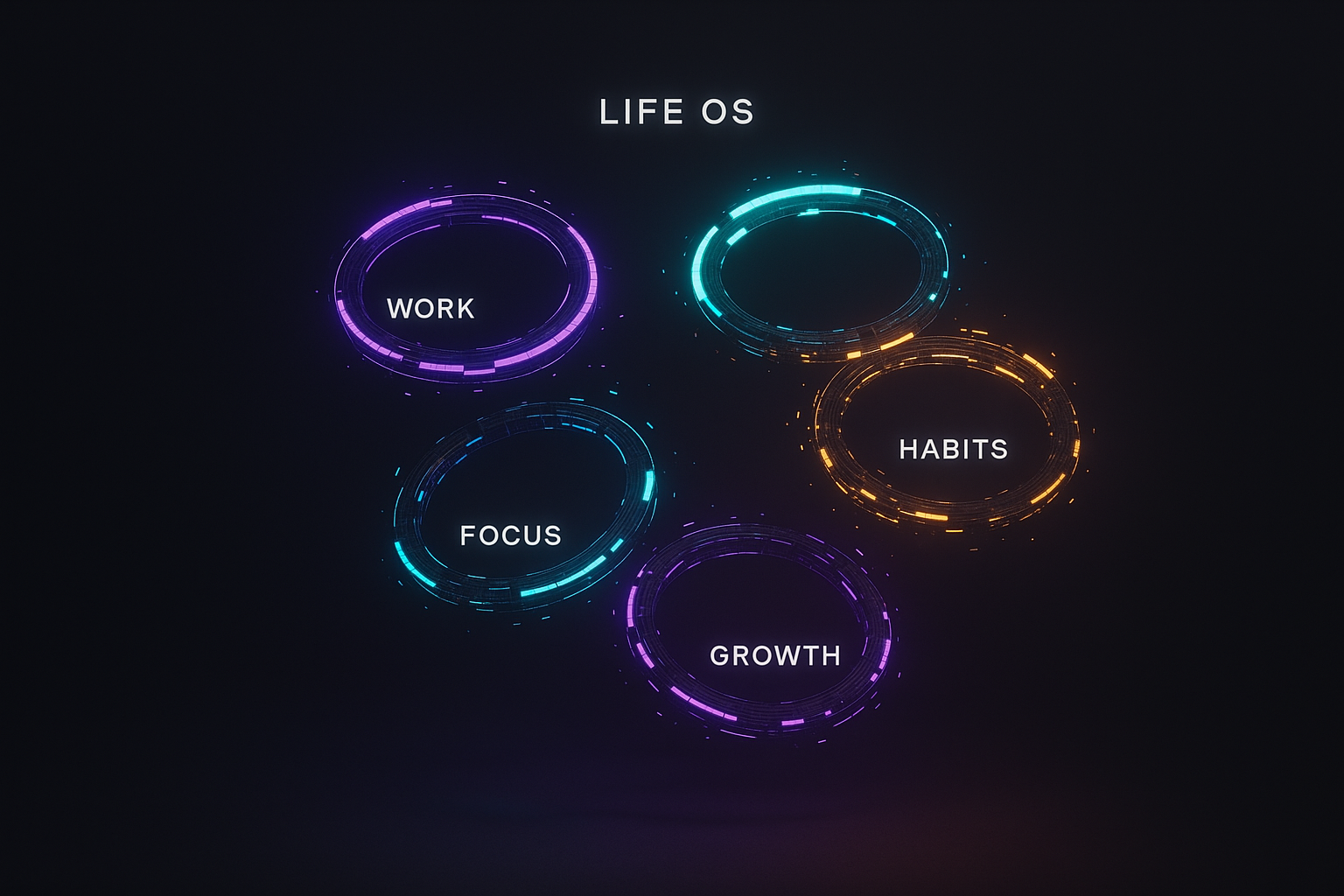
The Life OS dashboard is honest in a way that moods lie about. Work scored a 5 (treading water), health a 3 (skipped the morning swim), habits a 4 (broken infrastructure), focus a 4 (too much switching, not enough depth), growth a 6 (at least the market intel stayed sharp). None of those numbers are catastrophic individually. Together, they paint a picture of someone whose systems cracked and who didn’t notice fast enough to recover.
Here’s what happened: Tomer Morning—my automated portfolio and news briefing system—failed silently. I didn’t catch it until afternoon. That’s on me, not the system. And the moment I lost that morning clarity, everything else became reactive. Without those early data points anchoring my priorities, I spent the day in a fog, pulling tasks from the queue without real strategy, context-switching between incomplete things instead of shipping anything clean.
The Win That Almost Doesn’t Count
The portfolio brief went out. The news brief went out. The Asana ecosystem got audited. Tomer’s evening cron jobs all validated. By the metrics that matter—information flowing, stakeholders informed, systems running—the day was functional.
But it didn’t *feel* like a win because I didn’t own it. I executed it. There’s a difference. Ownership means you saw the dominoes before they fell. Execution means you did the work after someone else’s system told you it needed doing.
The AI and startup funding movements I tracked today? That’s still the domain where my mind is sharpest. I stayed on top of the tech sector movements despite the market volatility—NEE down 3.5%, GEV down 3.6%, TSM down 2.9%. The semiconductor sector is taking real heat right now, and my conviction on those positions is getting tested. That matters. That’s real growth happening inside a soft day.
But I’m noticing something uncomfortable: I’m probably over-indexing on the work I’m naturally good at (market research, portfolio analysis) and under-indexing on the structural work that’s harder (deep marketing task completion, team strategy sessions). Today proved it. When the systems broke, I retreated to what’s easiest.
{
}
The Health Miss That Reveals Everything
I didn’t work out. Strava errored out, but honestly, I skipped it anyway. That’s the third day this week where the morning automation broke and my personal routine went with it.
This is the pattern worth naming: I’ve built my day around external scaffolding—Tomer Morning, ScreenPipe, the automation suite—and when that scaffolding collapses, so do I. I use the system as permission to move my own body. Without it, I just… don’t. That’s a dependency I need to own and fix, because it’s weak. A strong system shouldn’t be fragile when the tools break. A strong *person* shouldn’t be fragile when the tools break.
Health dropped to 3 because I skipped the swim and never recovered with weights or BJJ. That cascades. When you skip the first domino, the rest of the day feels like you’re already behind. By afternoon, I was running on coffee and a vague sense of failure.
What Tomorrow Has to Be
This is the conversation I’m having with myself right now: either I fix the morning automation stack tomorrow, or I accept that I don’t actually want a fully automated life. I think I do want it. So tomorrow is debug day—Tomer Morning, ScreenPipe, the proactive AM stack. All of it gets audited and restarted.
Second: I’m picking one marketing task from that 1,884-item queue and I’m going *deep*. Not three tasks at 40% completion. One task at 100%. Done is better than distributed.
Third: I’m going to the pool at 6 AM whether the automation tells me to or not. Because if the systems are designed to make my life easier and I’m using them as an excuse to skip the hard parts, then I’m not building a system—I’m building a dependency.
The real question for tomorrow isn’t whether I’ll hit a 7 or an 8 on the Life OS score. It’s whether I’ll rebuild the infrastructure and then prove to myself that I can still move even when it breaks. That’s the difference between a system and a crutch.