When Your Automation Becomes the Thing Breaking Down
When Your Automation Becomes the Thing Breaking Down
Monday, May 11 — 11:47 PM
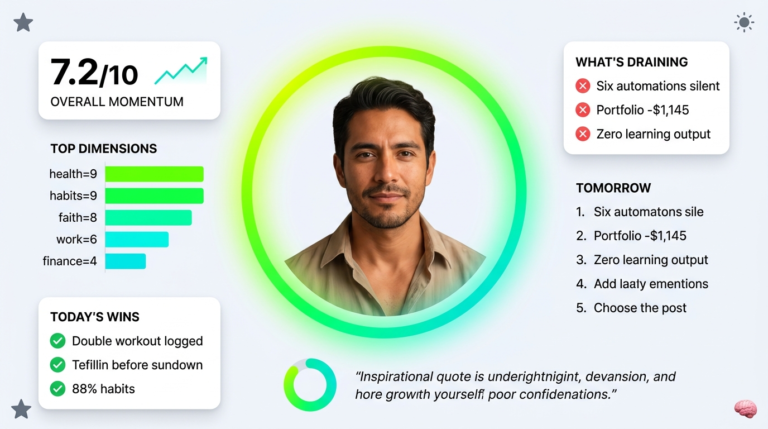
I built my entire operating system around systems that run while I sleep. Morning Email. Tomer Evening Brief. ScreenPipe summaries. Budget updates. Proactive alerts. All of them supposed to just work, feeding me signal so I can focus on sales strategy and life priorities instead of manual check-ins.
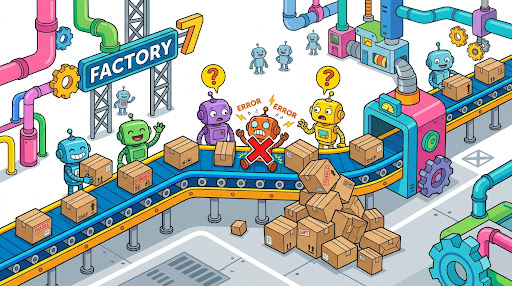
Today, five of them failed silently.
I didn’t notice until afternoon. That’s the problem with automation—when it works, you forget it exists. When it breaks, you lose coherence without realizing it. I was running the day on assumptions about information I thought I had. DNS issues on one service. Stale API key on another. By the time Cron Health surfaced the failures, I’d already made decisions in a partial fog.
The Graveyard, and the Weight It Carries
I opened Asana this morning and looked at the numbers:
- 100 incomplete tasks in Weekly Priorities
- 214 in Marketing
- 122 in Skilled Hunters (11 overdue)
I stared at it. Then I closed it. I didn’t triage. I didn’t prioritize. I just… walked away.
This is the tax of saying yes to everything and deferring the triage. As the head of my SDR team, I own quota. I own the team. I own the systems that feed the team. At the same time, I’m building OpenClaw and BruBot agents on the side, tracking Leopold’s AI recursion thesis across my portfolio, training twice a day, navigating sleep coaching with Daphna around Lior’s bedtime struggles. There are Alfred shortcuts reminding me of incomplete admin work I keep promising myself I’ll delegate.
The Asana graveyard isn’t a project management problem. It’s a commitment problem. Every incomplete task is a small lie I’m telling myself about what I can actually do.
{}
Eight AI Agents and Still Fragmented
I consolidated my AI tooling stack today. ChatGPT desktop app installed. Eight separate instances running in parallel—Baby Love for parenting, Ben for news, Tony & Tim as life coaches, Kyle for career, Dave R for finance, Matt for travel, Fazah for languages. Plus Claude. Plus this system.
It works. Each agent has a voice, a domain, a specific tuning. I use them all. The coherence comes from specialization.
But the switching cost is real. The overhead of managing eight separate conversations instead of one integrated system is a hidden tax on cognitive load. I’m optimizing for depth by sacrificing for breadth. Yalla, it’s a tradeoff. But I’m not sure I’ve actually *chosen* it.
What Breaks When Your Automation Breaks
Here’s what I learned today: you can’t run an automated life on top of broken systems.
The infrastructure debt catches up. DNS errors and stale API keys don’t feel urgent until they do. Morning Email fails, and suddenly you’re running blind. Budget updates don’t run, and you lose your portfolio rhythm. Cron Health alerts don’t fire, and you don’t know you’re broken until you’re already making decisions on bad data.
The honest thing is: I’ve been deferring the monitoring rebuild for weeks. I knew it was fragile. I prioritized building new automation over stabilizing existing automation. That’s a classic builder mistake—we optimize for growth, not resilience.
Tomorrow I fix the cron systems. I do the Asana triage. I stop pretending I can operate coherently across this many parallel tracks without integration.
The irony is sharp: I built automation to create space for what matters. But when the automation breaks, I lose that space faster than I ever would have by just doing the work manually.