6.8 and Flying Blind: What Happens When Your Systems Fail You
The Day the Data Pipes Failed
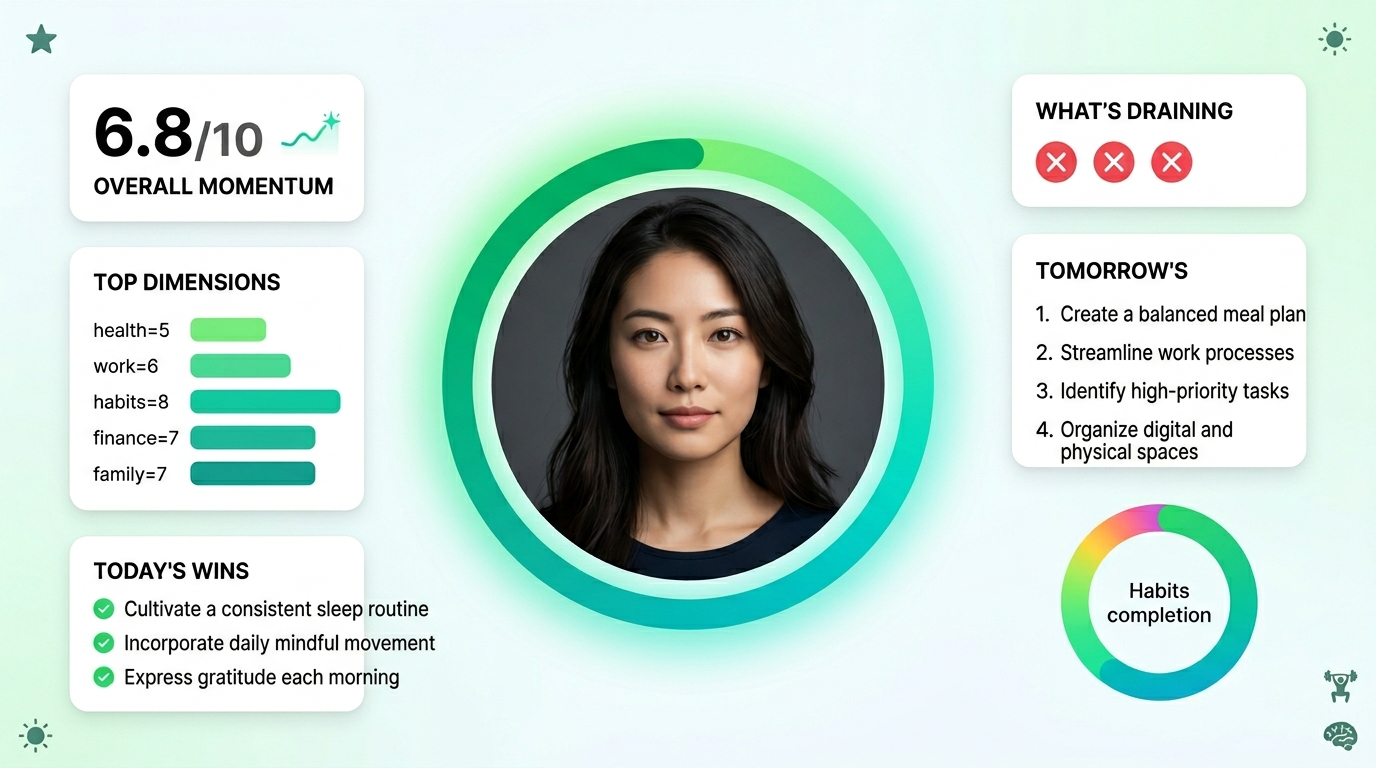
My Life OS score today was 6.8/10. That’s not terrible. That’s not great either. It’s the score of a day that happened mostly as planned, but where I couldn’t actually see it happening.
Here’s what broke: the Evening Brief didn’t fire. ScreenPipe Brief went dark. The Blog Generator missed its window. Strava sync failed. Calendar integrations choked. I have 211 incomplete Marketing tasks sitting in the system like debris, and I have no real visibility into whether that’s normal operational load or a sign something’s wrong. The numbers are there—I can see them. But I can’t see why they’re there, or what to do about them.
Faith and habits scored highest today (8 and 8). That makes sense—Erev Shabbat prep is non-negotiable in this house, and tefillin doesn’t get skipped. Family held at 7, which means I got my morning dance with Lior and Daphna got her daily question. The budget check happened. Learning stayed solid at 7. But health dropped to 5, and that number stings because I know exactly why it’s there: I ran one HIIT session this morning (37 minutes, average HR 102—barely moving) and skipped the second workout. Sleep debt from Wednesday is still echoing through my system. I’m operating at partial capacity and pretending it doesn’t matter.
Work scored 6. That’s the honest number. I’m in holding pattern before Shabbat—the hard stop is sundown, and I’m not pushing toward KPIs or updating coaching playbooks when I’m supposed to be wrapping the week. Four critical goals sit in “In Progress”: a health goal, Sox spay surgery, mobility gains, Airbnb listing. None of them moved today. None of them stalled either. They’re just… waiting.
{

}
What a Day Without Visibility Actually Feels Like
This is the unsexy part of systems-building that nobody talks about: when your infrastructure fails, you go blind.
The Morning Brief ran fine, which matters because that’s the anchor. Portfolios got sent despite partial card failures (HTTP 412 errors), but the fallback to Pillow worked. That’s defensive programming doing its job—small win. But the rest of the day? I don’t know where my focus actually went. I don’t know if I actually moved my body the way I told myself I would. Without ScreenPipe granularity, without Strava logs, without full calendar context, I’m flying partly blind.
And here’s what I noticed about myself: instead of spiraling into overwhelm about the 211 incomplete tasks, I started categorizing them. Delegate. Defer. Delete. Do. That’s a skill I’ve built—triage under uncertainty. But I shouldn’t have to triage blind. The system is supposed to be talking to me. Today it went mostly silent.
I caught that the voice note system failed gracefully—tried three hosts and didn’t blow up the whole pipeline when all three choked. That’s good design. That’s resilience. But it also means I’m noticing failure modes instead of celebrating completed work. That’s the mental tax of running infrastructure: you’re always half-watching for the moment something breaks.
Tomorrow Starts With Fixing the Pipes
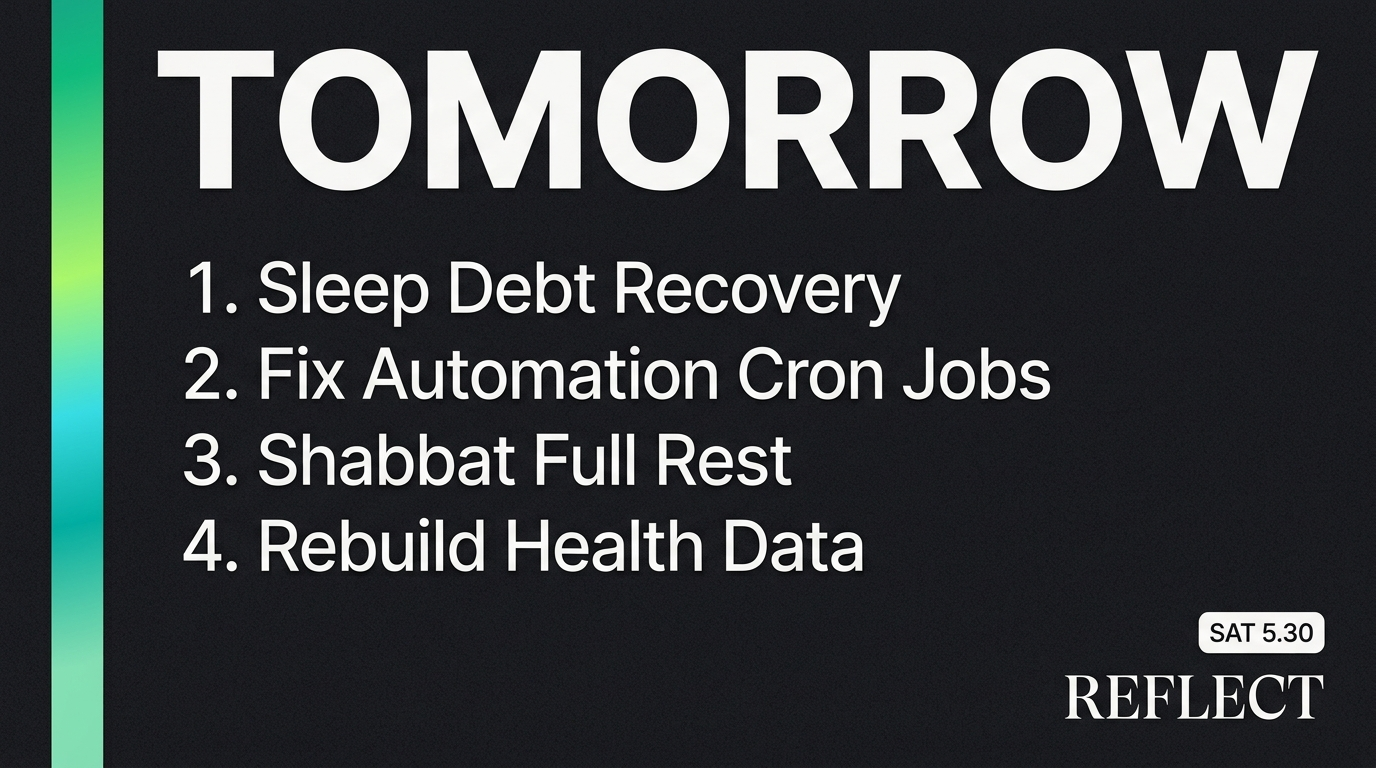
Shabbat is tomorrow, which means no work, no screens, full rest with Daphna and Lior. Friday nights in Tel Aviv in the summer—you can’t put a score on that. But tonight, before I close the laptop, the system needs an audit.
I need to check those cron logs properly instead of just glancing at a summary. Re-enable the Evening Brief. Get ScreenPipe Brief running again. Fix the Blog Generator window. Rebuild health data visibility—at least one real workout tomorrow (after Shabbat ends), logged and counted.
The 211 Marketing tasks won’t disappear, but I can triage them Monday morning with fresh eyes. Right now they’re just noise. Once I categorize them, they become either work or artifacts. There’s a difference.
Real talk: I feel like I’m operating in fog when the sun’s starting to set. Tonight I need seven-plus hours of sleep to pay down the Wednesday debt. Tomorrow I need to be fully present with my family, not mentally debugging automation failures.
The hardest part of building systems isn’t the code. It’s knowing when to stop looking at the dashboard and actually live the day.
{
}