7.2 and the Automation Trap: When Systems Break and You Don’t Notice
The Score Says Focused. The Reality Says Blind.
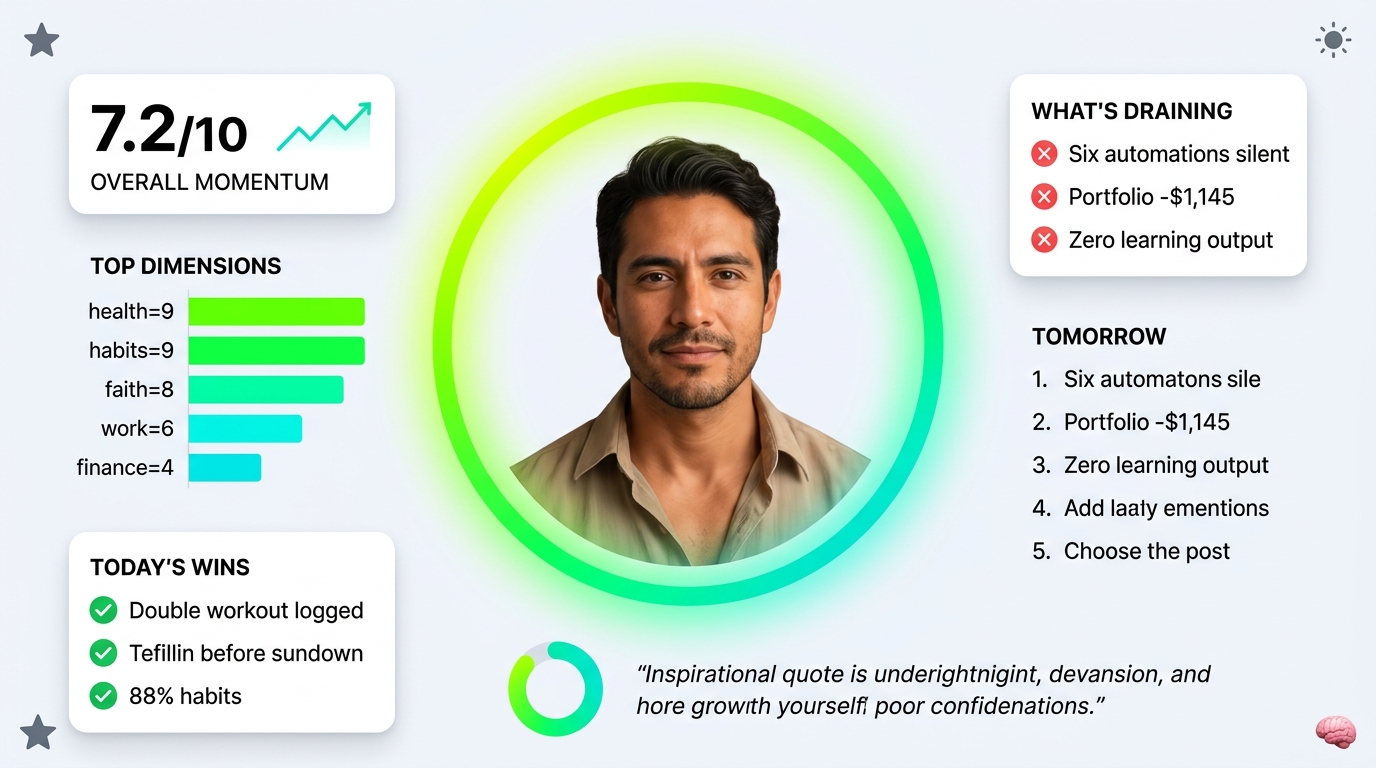
Friday closed at 7.2/10. Mood: focused. The number feels generous when I actually look at what happened.
Here’s what the Life OS dashboard is telling me: health is a 9 (two workouts, 1000m swim, 28-minute HIIT, tefillin before sundown). Habits are at 9 (seven out of eight tracked: morning dance with Lior, budget check, all the small rituals). Family is a 7 (Erev Shabbat prep solid, though scattered). Faith is 8. Work is a 6. Finance is a 4. Learning and system are both 6. And somewhere in all of that, the dashboard is saying I had a focused day.
But here’s the thing that keeps me up: I didn’t actually notice when things broke.
The Automation Graveyard
This morning, my Morning Brief ran perfectly. Portfolio sync, investment reading, news curation—all clean. Two blocks of investment analysis landed in my inbox like they were supposed to. I got real signal on AI data center electricity costs, NVIDIA’s competitive positioning, DeepSeek’s $7.4B fundraise. The system I built to feed me curated information actually worked.
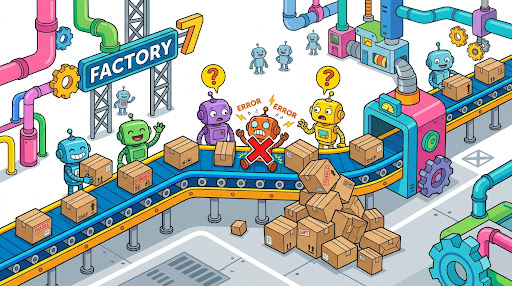
Then six other automations just… didn’t. Morning Email, Evening Brief, ScreenPipe Brief, Proactive AM, Blog Generator, Budget Updater. Not a failure message. Not an error. Just silence. They should have run. They didn’t. And I didn’t catch it until hours later—if I caught it at all.
This is the autopilot trap. You build a system, it runs once, you feel smart, and then you stop looking. You assume it’s still running. Meanwhile, your cron jobs are dead and you’re flying blind on the metrics that are supposed to tell you when to course-correct.

The Asana situation is worse. 1,895 tasks in Marketing. 876 in Weekly Priorities. 8 in Skilled Hunters. All of them sitting there. I have no idea which ones actually matter or which ones are organizational debt I should just delete. The work score is 6 because it’s Friday and nothing closed, but the backlog doesn’t feel like progress—it feels like I’m not ruthlessly prioritizing anything.
And that’s the real issue: I’m good at consuming information and building systems. I’m weak at execution oversight. I can wire up a morning brief and then never verify that the evening brief actually runs. I can load Asana with tasks and then not kill what doesn’t move the needle. The score says I was focused, but what I was actually focused on was consumption—reading, learning, input—while the output side atrophied.
What the Numbers Won’t Tell You
The portfolio dropped yesterday. AVGO got hammered. Finance scored a 4 because the bleed is real and spending is elevated. No panic—this is volatility in a long thesis—but it’s noted. The Leopold Aschenbrenner recursion loop thesis I’m running assumes exponential returns on AI infrastructure and data center plays, which means downside days are noise. Except they’re not noise if I’m not paying attention to them.
Here’s what bothers me: I can track health perfectly (workouts logged, sleep logged, HR data clean). I can track habits (Habitify doesn’t lie). But work—actual meaningful output—gets abstracted into a vague number that says “6” and moves on. I have no idea if I moved the needle on what actually matters for work today, or if I just consumed industry news and let my own pipeline atrophy.
The post-day audit revealed the real shape of Friday: high information intake, weak execution oversight, missed system maintenance. The 7.2 score feels like it’s measuring inputs (training logged, rituals done, information consumed) while missing outputs (what actually shipped, what moved forward, what got decided).
Tomorrow Is Shabbat. Then the Reckoning.
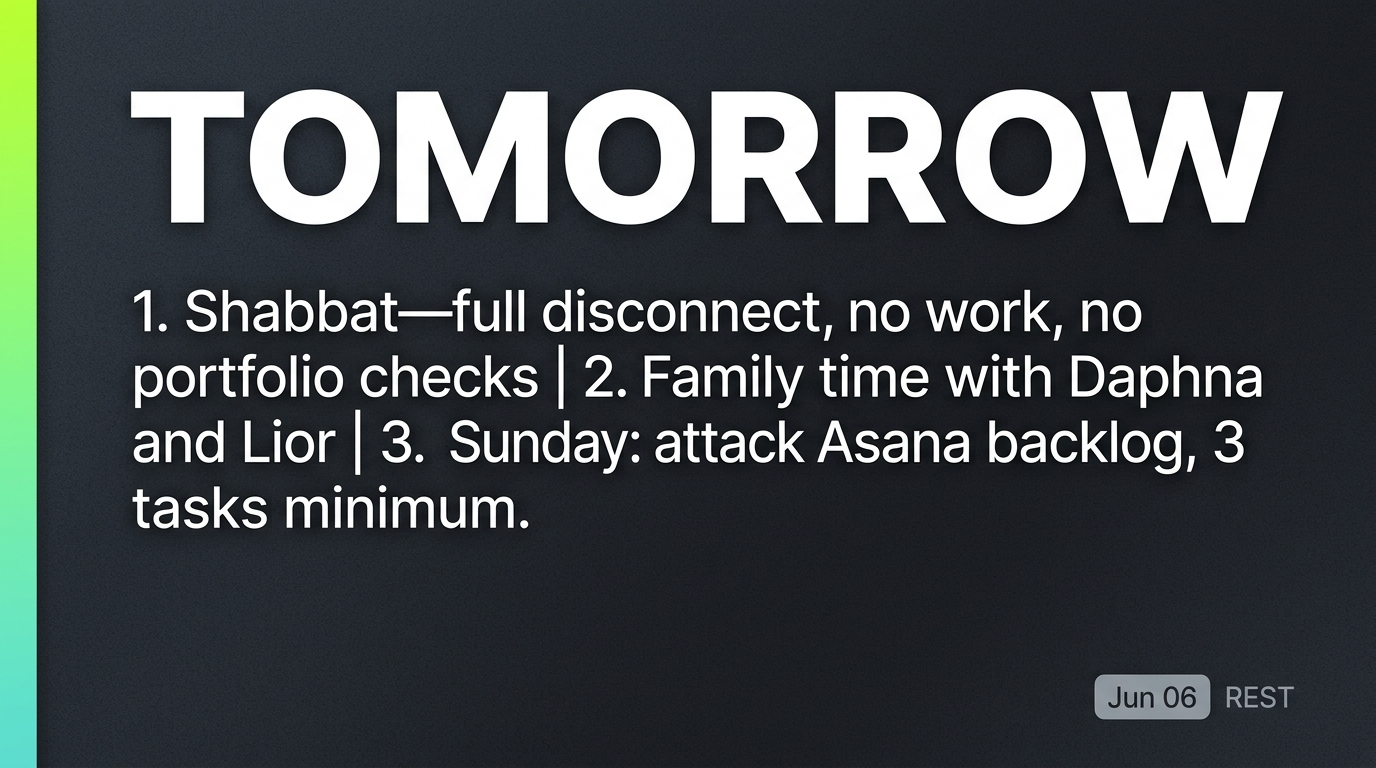
Shabbat starts tonight. No work, no portfolio checks, no system tweaks. Just Daphna, Lior, prayer, and the pause that makes everything else possible. The Erev Shabbat prep happens—it already is happening as I write this. Candles, family time, the mental shift into rest mode.
Sunday, the work sprint begins. Three Asana tasks minimum. Systems audit to fix the six dead automations. And a hard look at what actually matters in Marketing and Skilled Hunters—because a backlog that large isn’t a to-do list, it’s a failure to prioritize.
The real question for next week: how do I get the output dimension—the actual shipping, deciding, moving-forward part—to score as high as my input dimension? Health and habits are strong because they’re measured. Work isn’t because I haven’t built the measurement system that forces ruthlessness.
That’s the gap. That’s what 7.2/10 is actually telling me, if I listen.