When Does Your Agent Wrapper Actually Earn Its Keep?
There’s a moment mid-build when you look at your own architecture and ask whether you’ve been solving a real problem or just constructing elaborate scaffolding. That question hit hard today, and the answer is more nuanced than I expected.
Somewhere around hour four of wiring up a voice-call briefing system — the kind where an AI phones you in the morning instead of sending a text wall — I stopped and typed a question into Gemini that I probably should have asked six months ago: Why do I still need a custom wrapper agent when Claude Code already ships with remote controllability baked in?
The question didn’t come from laziness. It came from noticing that the gap between “what my wrapper does” and “what the underlying model can now do natively” had been quietly closing for months. That’s the kind of architectural debt that doesn’t show up on a balance sheet until you’re rebuilding cron jobs from scratch at midnight because a single killed process silently wiped your entire schedule. More on that in a moment.
The Case for Rolling Your Own Wrapper
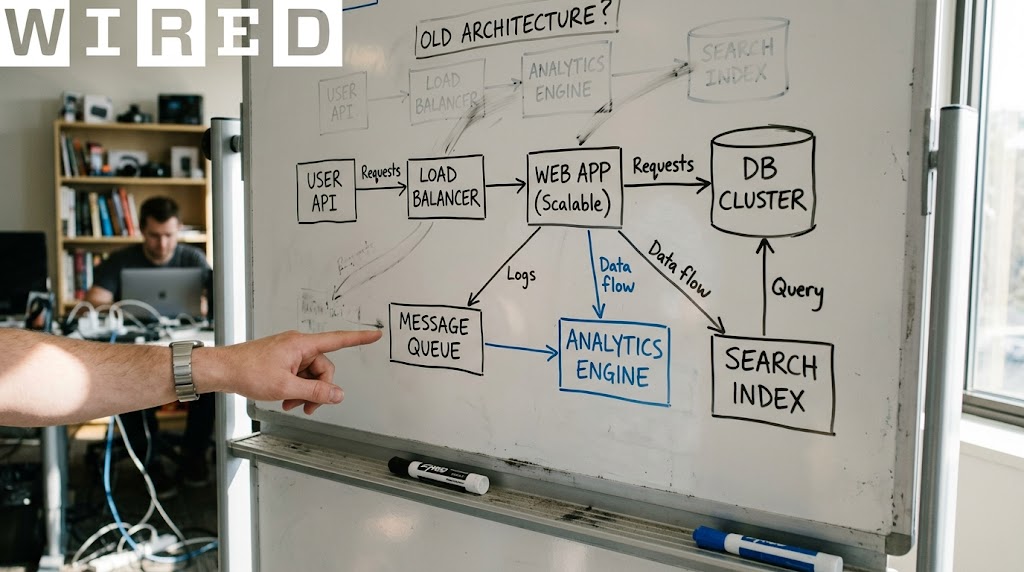
Custom wrapper agents — call them Hermes, OpenClaw, whatever your internal naming convention spits out — exist to solve problems that raw model APIs don’t touch. Session persistence across long-running workflows. Multi-model routing so you can send a cheap task to a fast model and a nuanced reasoning task somewhere else. Telegram hooks that let you interact with your stack from a phone without standing up a full interface. Scheduled jobs that fire on a cron and hand off context correctly without you babysitting the thread.
These are real problems. If you’re running anything resembling a personal agent stack — morning briefs, portfolio monitoring, automated publishing pipelines — you’ve hit all of them. The wrapper layer is where you handle the unglamorous connective tissue: retry logic, context windowing, credential rotation, output formatting that doesn’t require you to parse JSON at 7am.
For a while, building this layer yourself was the only serious option. The alternative was duct-taping together third-party orchestration tools that didn’t understand your specific data shapes and introduced their own failure modes you couldn’t debug.
What Claude Code’s Remote Control Actually Changes
Claude Code with remote controllability is a different kind of threat to the custom wrapper thesis. It’s not just “the model got smarter.” It’s that the execution environment itself is now addressable. You can invoke it programmatically, maintain state across a session, and get deterministic tool use without writing the scaffolding that makes tool use reliable.
That’s not nothing. That’s actually most of what a lightweight wrapper agent does in a simple single-model workflow.
The honest answer to my own question is this: the wrapper earns its keep at the seams. The moment your architecture has more than one model in the loop, or more than one data source feeding into a session, or any requirement for the agent to survive a process restart, the native tooling starts showing its edges. Claude Code’s remote control is powerful inside its own context window. It doesn’t inherently know about the Telegram message you sent three hours ago, or the portfolio signal that fired at 6am, or the health metric that should have modified today’s brief but lives in a different system entirely.
That cross-system memory, that stateful context threading — that’s what the wrapper is actually for. Not to wrap the model. To wrap your life’s data around the model in a way that makes each interaction feel continuous.
The Invisible Systems Problem
Here’s the other thing that happened today, and it’s related: a cron infrastructure running six daily jobs got silently destroyed when a bot process was killed. No error. No log entry that said “hey, your schedule is gone.” Just absence. The jobs stopped firing and the system kept running, healthily, doing nothing it was supposed to do.
This is the invisible systems problem. When your agent stack is working, it’s invisible — you just get your brief, your alerts, your automated posts. When it breaks in a silent way, you don’t know until you notice that nothing has happened for two days and you start pulling on threads.
Custom wrappers make this worse if you’re sloppy, and better if you’re disciplined. The native tooling doesn’t solve it at all — it just moves where the silence lives.
What Builders Should Actually Take From This
If you’re building a single-model, single-session workflow with well-defined inputs and outputs, stop writing wrapper code. Claude Code’s native capabilities will handle it and you’ll thank yourself in three months when you’re not debugging a framework you invented.
If you’re threading multiple models, managing persistent state across data sources, or building something that needs to survive restarts and still know what it was doing — the wrapper layer isn’t premature engineering. It’s the product. The model is a component inside it, not the foundation under it.
The question isn’t “wrapper or no wrapper.” It’s whether your wrapper is doing real work or just making you feel like an architect.
The native capabilities of tools like Claude Code are closing the gap fast — and that’s genuinely good news, because it forces you to be honest about what your custom layer is actually doing. If it’s routing, persisting, and threading context across systems, it belongs. If it’s just adding indirection so you can say you have an agent framework, kill it and ship faster.